
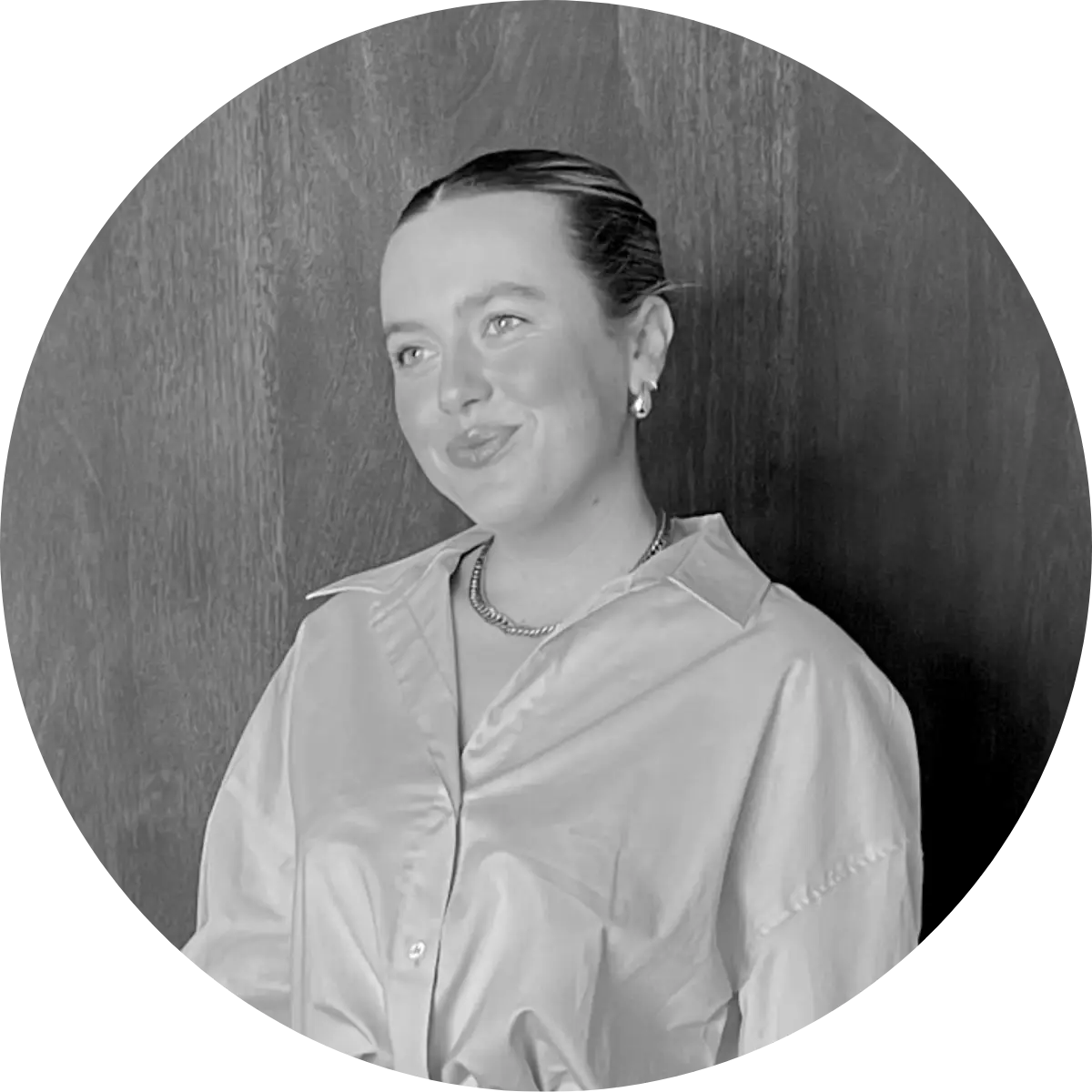

In feature 042 of Conversations Behind The Campaign, we sat down with Jillian Wheeler, a freelance Creative Director and Brand Strategist.
For the better part of a decade, Jillian Wheeler has built her career inside brands, shaping the stories and visual language that make them instantly recognisable. Most notably at CASETiFY and Sweetgreen, her work across creative direction and talent has seen her collaborate with names including Nicolas Vansteenberghe, Nara Smith, Aki and Koichi, and Reneé Rapp. Now working freelance, she’s applying that same end-to-end creative approach across a new wave of brands.
In our conversation, Jillian Wheeler explores the balance between creativity and commerciality, what actually makes a partnership cut through, and the tension between trusting instinct while accounting for social trends.
1. What originally pulled you towards creative direction? Was it something you’ve always gravitated towards, or did it evolve naturally as your career progressed?
I actually went to business school for marketing, not art or design. I’ve always been creative, but not in the traditional sense.
“”
I wasn’t the kid who could draw or paint. I had ideas in my head, strong opinions on aesthetics, and a deep curiosity about culture, but for a long time I didn’t know how that translated into a real career.
It wasn’t until my first job in marketing, when I was suddenly responsible for photographing product and shaping how it showed up within the brand. That’s when something clicked. I realized I had a talent for building the vision, not necessarily making the art myself. It evolved naturally once I found that outlet.
2. For those unfamiliar with the role of a Creative Director, can you share what your main responsibilities are?
As a Creative Director, I translate business goals into creative worlds. That means developing the overarching concept for campaigns, defining the tone and visual language, and building the framework that teams execute against. I guide everything from art direction and casting to storytelling and channel strategy to ensure it all feels cohesive and culturally relevant.
I’m not the one designing every asset myself. My job is to set the standard, protect the idea, and lead a team of designers, writers, and partners to bring it to life in a way that feels intentional and aligned with the brand.

3. As a creative, how do you stay true to your own instincts and ideas without letting trends or social media influence your work too heavily?
I try to anchor everything in identity before I ever think about trends. When I start working with a new brand, my first step is listening. I want to understand who they are at their core and what kind of world they want to create. Once that foundation is clear, it becomes much easier to filter out noise and make decisions that feel aligned instead of reactive.
“”
Trends can be useful signals, but I don’t chase them. I focus on elevating the brand’s story and creating the right kind of tension so the work feels distinct and intentional, not like it’s trying to keep up with everything else on social media.

4. You work on ideas that need to be both creatively strong and commercially effective. How do you navigate that tension?
I actually see creativity and commerce as partners, not opposites. I usually start by grounding a campaign in something culturally relevant.
“”
If the idea taps into a real behavior, tension, or moment people already recognize, it naturally becomes more compelling. From there, I build a creative world around that insight so it feels immersive and intentional, not just like an ad.
When something is culturally sharp and visually strong, it becomes more shareable. And shareability creates more eyeballs, more conversation, and ultimately more impact for the brand or product. The goal is always to make the work feel meaningful enough that people want to engage with it, not just scroll past it.
5. I couldn’t interview you without asking about the Olandria Carthen and Nic Vansteenberghe campaign you did whilst at Sweetgreen. Could you share how that collaboration came about?
This campaign will forever be so special to me. It was July or August and Sweetgreen needed a campaign moment around a fall menu item. I had spent the summer watching Love Island like everyone else, and when Nic said he wanted to become Olandria’s countryman, something clicked.
Historically, Sweetgreen hadn’t partnered with reality TV stars. But I saw a thread. There was this unexpected overlap between the cultural narrative happening on screen and Sweetgreen’s core values around farming and modern agriculture. That tension felt interesting and fresh.
So I pitched the idea internally as a way to tap into a real cultural moment while still staying true to who Sweetgreen is. We turned Nic into a sweetgreen cowboy for Olandria and it pretty much went viral the second we posted it.
As a second beat to the season, we knew we had to include Olandria. That chapter was different in tone, but I grounded it in what the Nicolandria fan base was already saying online. The “Barbie and Ken” narrative was everywhere, so I leaned into that dynamic in a way that still felt rooted in Sweetgreen’s world.
Nic and Olandria were so lovely to work with. Their community has been so supportive like nothing I’ve ever experienced, really special.

6. With the widespread success and attention it garnered, what lessons did it teach you about identifying trending talent and staying reactive as a brand?
I was pushing Sweetgreen outside of its traditional partnership comfort zone, and anytime you introduce something that feels different, there will be hesitation/opinions.
“”
What I learned is that being reactive is important, but being reactive alone isn’t enough. The key is grounding the talent deeply in the brand narrative.
If you can create real connective tissue between the cultural moment and the brand’s core values, that’s when the work feels progressive instead of gimmicky. It allows the brand to show up in culture in a way that feels fresh.

7. On the back of that, when working with influencers on collaborations and campaigns, beyond metrics what are you actually looking for?
For me, it can go two ways. The first is choosing someone who feels completely aligned with the brand’s world and values, but has the scale to put you on the map in a bigger way. That kind of partnership amplifies what’s already true about the brand and accelerates it.
“”
The second is more tension driven. Casting someone unexpected who still connects conceptually, but introduces the brand to audiences you may not have reached before. That tension can create conversation and curiosity, which is often more powerful than pure reach.
In both cases, I’m asking one question: does this person naturally fit into the story we are trying to tell, or are we forcing it? If it feels organic, the impact will last longer than any spike in metrics.

8. Now that you’re working with brands across skincare, fashion, and FMCG, do you draw inspiration from within their industries, or do you look to completely new areas – even offline spaces – for ideas?
When you only reference your category, you end up making work that feels incremental. When you borrow energy from somewhere unexpected and translate it through the brand’s lens, that’s when the work starts to feel distinct.
Of course, you need to understand the industry you’re working in. You should know what everyone else is doing so you can avoid repeating it. But most of my inspiration comes from outside the immediate space. I look at film, retail environments, packaging design, architecture, even physical spaces offline that create a certain feeling.
9. Also working as a brand strategist, what are the key things you aim to achieve with your content? Essentially what do you think makes content truly land with an audience
When I’m developing content, I ask myself two simple questions. Is this shareable? Would someone want to save it? If the answer is no, it probably is not distinct or valuable enough yet.
The content that truly lands usually does one of three things. It makes someone feel seen, it gives them something useful, or it sparks conversation. If we can do at least one of those while staying consistent with the brand’s identity, we are building more than content. We are building relevance.

10. What can we expect to see from you over the coming months? Any exciting projects in the works?
The past two months of going freelance have honestly been incredibly energizing. I’m so grateful for the work and the trust I’ve already been given. It’s been exciting to step into new categories like beauty and skincare and apply my storytelling lens in fresh ways.
11. What has been the biggest challenge in your marketing career and what advice would you share with someone going through something similar?
There will always be people who don’t immediately see the vision. Early on in my career, that felt personal. My advice would be to keep refining your voice, push yourself creatively, and bet on yourself even when it feels uncomfortable. The right rooms and the right collaborators will see it. And when you stay consistent and confident in your perspective, it does pay off.
12. Where can our audience follow and engage with you on socials?


